COURSE OBJECTIVES:
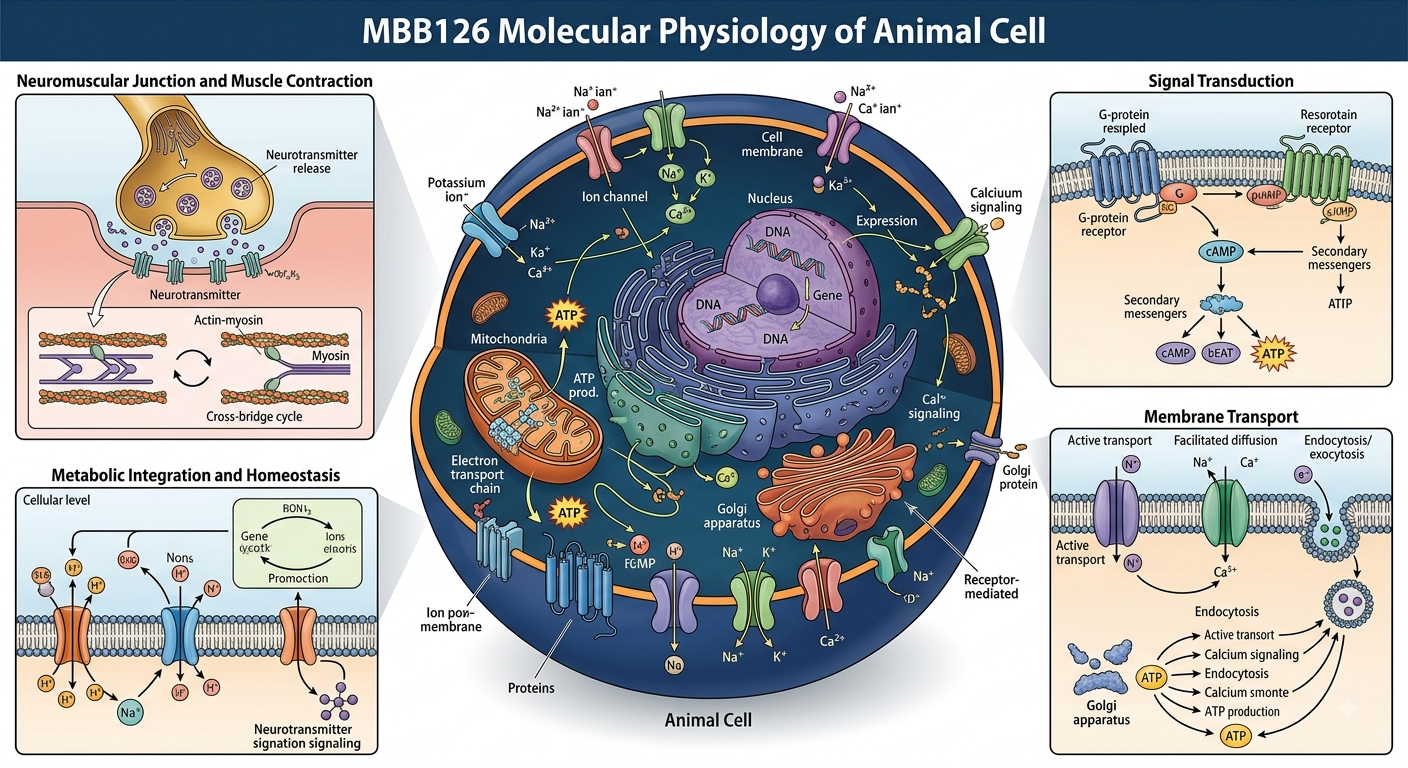
Animal cells are important to molecular biology as model organisms that help us understand cellular physiology at the molecular level. A thorough understanding of animal cell structure, function, and diversity is essential to the work of a molecular biologist, as are skills in handling them in experiments. Animal cells, however, respond to slight variations in experimental conditions and are readily contaminated. Thus, techniques for their handling are complex and require substantial practice. This lecture course aims to provide molecular biology undergraduates with a thorough understanding of the physiology of animal cells at the molecular level, and the techniques for handling animal cells in culture.
COURSE OUTCOMES:
1. Describe and explain fundamental structure and organization of animal cells.
2. Describe and explain molecular processes, pathways and signaling systems that animal cells
utilize in normal physiological context, and disease states.
3. Describe and explain techniques used to study animal cells.
- Teacher: Alvin Bacero Bello
- Teacher: Eloise Prieto